
If you’ve ever gone to the gym and thought the Pilates reformers and treadmills were for girls, while the squat racks and barbells were for boys, we need to talk.
Don’t get us wrong, we’re all about mobility work and cardio. And it’s no secret that Pilates is deceptively hard! But women can benefit SO much from dedicated weight-training time.
Surprised? It’s true. Lifting weights isn’t just about bulking up. Strength training actually helps you feel healthy, strong, capable, and confident in everyday life. Not to mention it’s beneficial for your bones, hormones and longevity as you age. Not to mention it can create a better quality of life in your golden years.
So, if you haven’t integrated weights into your workout routine, now’s the time to start. Below, we’ll get into what a strength training workout system is, why you need it, and how to get started.
Let’s get to it.
What Is Strength Training for Women?
Strength training is a type of exercise that uses resistance to build muscle mass and support overall health. That resistance is usually free weights, but it can also include resistance bands, machines, or even your own body weight.
When we’re talking about weight training for women, we’re not talking about becoming chiseled bodybuilders. That’s probably not the aesthetic you’re going for.
Luckily, lifting weights a few times a week won’t turn you into Arnold Schwarzenegger. In fact, it’s super hard to build a physique that looks even remotely bulky or masculine. So, no, you don’t need to worry about doing that by accident.
Instead, strength training for women is more about how you feel. Yes, you’ll look amazing, but the real magic is in the powerful health benefits that come with building muscle.
Here’s why it’s so important for women:
Why Is Strength Training Important for Women?
Traditional “Girl” Workouts Only Burn Calories
If we’re being really honest, there’s a pretty obvious divide between traditional “male” and “female” workouts. Women are often encouraged to focus on long cardio sessions, high-rep/low-weight workouts, and mobility-based exercise.
There’s nothing wrong with these. Things like long-distance running and Pilates are great for burning calories and flexibility. However, on their own, they build very little muscle. That means you may lose body weight, but you could also experience a loss of muscle mass along the way.
That’s why it’s so important to pair these typical “girl workouts” with regular strength and resistance training. Lifting weights helps preserve and build muscle, which balances weight loss and creates a more sculpted, defined look.
Muscle gives your body structure. As you lose fat, that space is filled in with strong, toned (not bulky) muscle, helping prevent sagging skin or a sunken look. The result is a firmer overall figure and skin that appears more plump and smooth.

Builds Lean Muscle and Boosts Metabolism
One of the main benefits of strength training is building muscle. When you lift weights, your muscles are placed under controlled stress, which helps them grow stronger, denser, and more resilient.
This means that as you burn calories, you’re preserving muscle instead of losing it. And as a bonus, strength training boosts your metabolism, making it much easier to maintain a healthy weight over time.
Supports Hormone Balance
Weight training is also super beneficial for hormone regulation. This is especially important for women, whose hormones naturally fluctuate throughout the menstrual cycle and across different life stages. Think perimenopause and menopause.
When you lift weights, your muscles act like a sponge for glucose (aka sugar), pulling it out of the bloodstream and using it for energy.
More specifically, though? Chronic high blood sugar is a major driver of imbalances in estrogen, progesterone, and testosterone. So, weight training can be really helpful for keeping those hormones more stable.
And when your hormones are balanced, you feel the difference. Energy levels are steadier, cravings are more manageable, and mood swings are less intense. Many women also notice better sleep, improved focus, and a deeper sense of calm and relaxation.
Improves Bone Density and Joint Stability
When you strength train, you place healthy, controlled stress on your bones. This signals your body to build and maintain strong bone density.
That matters as we age, especially during perimenopause and menopause, when estrogen levels can drop. Lower estrogen increases the risk of osteoporosis, which is why maintaining bone density now is so important for long-term health.
Weight training also strengthens the muscles, tendons, and ligaments that support your joints. To put it bluntly, no one should be dealing with bad knees, weak ankles, or lower back pain before 40—and strength training helps protect against that.
Enhances Functional Strength
Strength isn’t just for the gym—it’s for real life. Every day you’re lifting, carrying, pushing, pulling, twisting, and balancing, whether you realize it or not.
Think hauling groceries, lugging suitcases, carrying kids, moving furniture, or just getting through a long day without your body feeling wrecked. When you train for strength, those everyday tasks feel easier and require way less effort.
Building muscle also helps your body move better. Strong muscles support your joints, keep everything aligned, and lower your risk of those nagging aches and tweaks that tend to creep in as you get older.
And the bonus? Improved balance, better posture, and more confidence in how you move—so you feel capable, steady, and in control all day long.
Increases Confidence and Body Composition (Without “Bulking”)
Strength training doesn’t make you look jacked and hyper-masculine. However, it does change your body composition.
As you build muscle and lose fat, your body looks firmer and more defined—not bigger. Muscle is more compact than fat, which is why many women look leaner even if the scale doesn’t move much.
Beyond the physical changes, lifting weights builds confidence. Feeling strong in your body shows up in your posture, your presence, and the way you carry yourself.
How to Begin Strength Training for Women
Take the guess work out of where to start.
If you’re overwhelmed by contradicting exercise content, Pvolve is for you. There’s a reason Jennifer Anniston loves it.
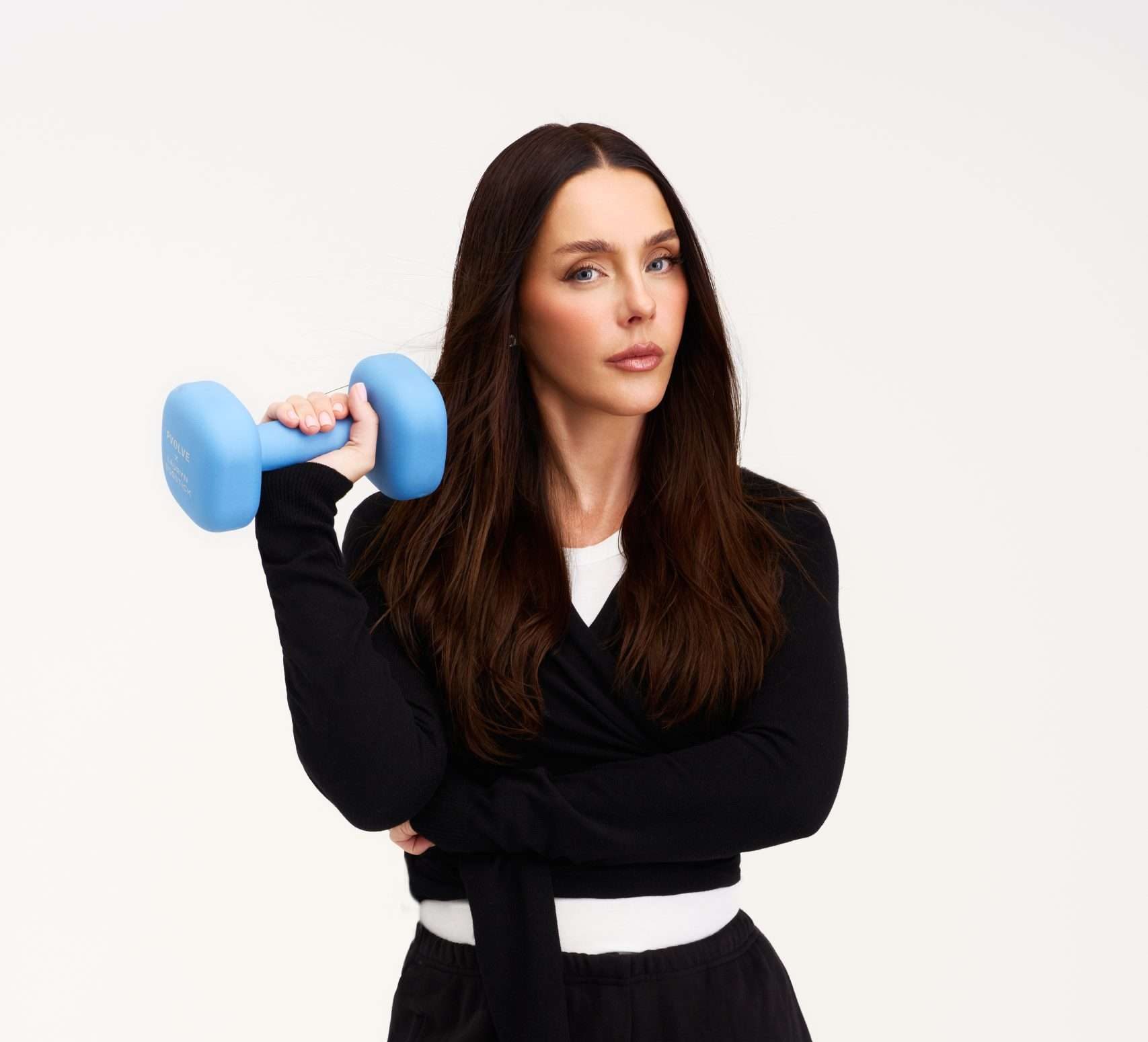
Lauryn loves Pvolve and recently launched her limited edition equipment in French blue. It’s the type of equipment you want on display. What we mean is – it’s absolutely gorgeous. The bundle includes everything you need to complete the NEW 4 week program that comes with it.
Why does Lauryn love it?
It helped transform her body composition and changed how her body feels. She’s stronger, more supported and more aligned. The Pvolve system builds strength that actually translates into real life. You’ll see definition, but you’ll also feel capable and stable.
Start with a simple, structured plan from Obé Fitness.
One of the easiest ways to stall your progress is by doing random workouts with no real structure. A clear strength training program helps you stay consistent, balanced, and intentional with your time.
That’s why Obé Fitness works so well. Their guided strength training routines for women take the guesswork out of what to do and when to do it. This makes it so much easier to build strength week after week—especially if you’re training at home or just getting started.
Here’s how to create a workout routine with Obé Fitness.
Focus on proper form before increasing weight.
Before chasing heavier weights, it’s important to learn how to move correctly. Proper form helps you activate the right muscles and protects your joints from unnecessary strain. And trust us, injuries don’t always show up immediately—better safe than sorry.
Once your movement feels solid, adding weight becomes safer and far more effective. You’ll feel stronger and more confident in every lift.
We talk about this a lot more in our post with glute specialist, Sandy Brockman.
Train 3–4 times per week consistently.
You don’t need to live in the gym to see results. Strength training three to four times per week is enough to build muscle and feel noticeably stronger.
The key is consistency. Regular strength training sessions give your body time to adapt and improve without burning you out.

Prioritize progressive overload over constant variety.
Progress happens when you gradually challenge your muscles. Progressive overload just means increasing weight, reps, or control over time.
Switching workouts constantly can feel fun, but sticking with core movements and improving them is what actually builds strength.
Pair training with adequate protein, rest, and recovery.
Lifting weights breaks muscle down—recovery builds it back up. Without enough protein, sleep, and rest days, progress can stall quickly.
When you support your training with proper recovery, you’ll feel stronger, more energized, and better overall.
Need help with the nutrition part? Here are some tips on protein intake and lifting weights.
What Are the Best Strength Training Exercises for Women?
Compound Lower-Body Movements
Compound lower-body movements work multiple muscle groups (quads, glutes, hamstrings, and core) at the same time. Small, mindful movements are what lead to better coordination, stability, and mobility – all necessary in the gym and in real life.
Start with these exercises:
Squats
Lunges
Split squats
Glute-Focused Exercises
When we hear “glute-focused exercises,” most of us think of a sculpted, lifted booty. And, while that’s important, these exercises help with a lot more than that. You’ll get better posture, pelvic stability, and overall movement efficiency.
Think: mind-muscle connection, it makes all the difference here. Prioritize the exercises below with slow reps, intentional pauses, and proper alignment:
Hip thrusts
Glute bridges
Abductions
Romanian deadlifts
Single RDLs
Want even more advice? Tune into this episode of The Bossticks with Sandy Brockman.
Upper-Body Strength Staples
Upper-body strength (not upper-body bulk) is often overlooked but it’s a total game-changer. These exercises target the back, shoulders, chest, and arms, while also improving posture and stability.
Exercises like the ones below not only reduce shoulder and neck tension, but they also help create a balanced, athletic physique:
Rows
Presses
Pull-downs
Bicep curls
Push-ups
Core-Stabilizing Movements
Core training isn’t about counting crunches, it’s about stability and control. These movements actually train the deep abdominal muscles and support the spine and pelvis. Not only will you feel better, but you’ll also improve balance and overall coordination.
Interested in getting started? Add these to your daily routine:
Planks
Carries
Dead bugs
Supermans
Kettlebell swings
Functional Strength Exercises
Functional strength exercises bridge the gap between gym training and real-life strength. You’re essentially training your body to work as one, holistic unit. This can improve coordination, balance, and strength under load.
Start with…
Carries
Step-ups
Rotational core work
Wood chops
Sled pushes
Everyone should be hitting the weights at the gym—especially women.
So maybe the squat racks and barbells aren’t “boy workouts” after all. Turns out, they’re just strength training, and women belong there, too.
And while you’re gearing up to get started, check out Lauryn’s favorite gym outfits of the moment here (use code SKINNY).
x, The Skinny Confidential team
+ Check out Lauryn’s latest fitness essentials.
++ Learn why Lauryn loves to do Pilates twice a week.